Showing posts with label albania. Show all posts

1.5.13

II : LXVII - LXXII On a Distant Shore with a Wild Heart

It was long ago and far away; it was a community united by war and despair, speaking an extinct dialect, surrounded by an aura of danger and mischief. It's a group of barbarians, or so they called them, band of misfits, blood thirsty bandits, and their existence threatens the weary sailors who happened to reach the shore where the Souliotes reside.

https://upload.wikimedia.org/wikipedia/en/7/78/Deux_%CE%B9tudes_de_costumes_souliotes.JPG

Childe Harold wasn't too crazy about those legends of Souliotes: those outcasts of both Greek and Albanian societies, expelled and had nowhere else to go; they are the Robinhoods on the shore, dancing and singing war songs around the campfire. Maybe they'd even kill their prisoners and drink their blood, like how they are described in stories. Simply put, Suli was the last place Childe Harold would willingly be if he had any other choices. And for the first time since he took off, for the first time during his turbulent voyage, he was scared. He felt a shiver down his spine as he feels his damp clothes, as he struggles to keep his weary eyes open.

They're about to anchor, and the rest is at the mercy of fate.


Coming just from Ali Pasha's hub, personally I wouldn't know what to think approaching the Souliotes. This pitiful group of outlaws have been in conflict with the tyrannic ruler since 1803, and there doesn't seem to be a perceivable end. Comparing the two sides, anyone would feel sympathetic to the Souliotes: these are the soldiers without proper food or equipments, whereas Ali Pasha, as we now know very well, is having it all: his luxurious lifestyle, his relentless spending... He was respectful to Lord Byron, we'd learnt about that, but him being hospitable couldn't change Byron's contempt towards him. As for the Childe, he's mostly overwhelmed by the journey by now. The crust of waves pushed his ship up and dragged him down as if to the depth of hell. And when the spirit is low and the body has succumbed to exhaustion, all one asks for is some stillness.


https://blogger.googleusercontent.com/img/b/R29vZ2xl/AVvXsEhAs-7I9_Hwcrt_VZD6E5rgz2RIIBR-4C7L27l-AC7qo-bjRAqGlxcPneZYSaWi5WT8tpW2USuTUi26nHji8ZJ-lXU9sFGD_cZpGDfCcAEs1ofGrALoJbHNl-RUaD-tzN_tBvF7QU5Q3WZ4/s1600/tromaktiko12.jpg


Suli had been the least likely place for Harold to get his blissful rest. But he, along with everyone else on the ship, was surprised by the locals who offered the Childe not only kindness but also stirred up his curiosity, restored his spirit. (It's quite believable that this experience led to Byron's eventual leading in the Greek Independence War, but that's thereby another story.)


It's rather tricky, the work of our hearts. We always feel the most fondness towards those who happened to reach out to us and lend us a hand when we're at rock bottom, even when they're the most unlikely bunch of people we'd make friends with. In universal sorrow we make the strongest bond and form the greatest friendship, though sometimes incomprehensible to the distant spectators. It's all in perspective.

Harold sees unfamiliar faces on people who speak an entirely different language, wearing strange costumes and moving in ways, the meaning of which he couldn't quite grasp. But their kindness opened his heart and he found beauty in their ugliness, forgiving their ungentle characteristics and perceived their vulgar nature as simply something he's yet to familiarize.

In a world without prejudice and hostility, the construction of babel tower would be simple task.


At dusk Harold joins the Souliotes for their feast. The local break out a banquet for the guests from a faraway land, who talks and dresses in a way they wouldn't even try to understand. Their intentions were simple, though might not be understood by the cynical, overly sophisticated minds from "civilized societies": to feed the hungry, to sooth the tired, to care for the poor in spirit, to be merry at the simple happiness and to celebrate the victories in protecting their land.

http://upload.wikimedia.org/wikipedia/commons/e/e5/Souliotes_19th_century_painting.jpg


Sometimes we claim to look at different cultures and different people of the world with an open mind, yet we wears filters through which we speculate the world we live in too much, too constantly that we forgot about them. It takes a lot of courage to rip them off and cast away the standards we're all too familiar with when taking in something new and initially hard to swallow. I guess Harold's situation makes it easier for him, on a distant shore with a wild heart, when there's nowhere else he can turn to.


The Souliotes chant their song as if it's a spell. No doubt they sing it to the gods they worship, but they mostly sing it to themselves, to forget about their tragedies, to sooth their wounds, to gather their courage and to fight on when the sun comes up in the morning.


Byron included a complete translation of the Souliotes' war song in Canto II, which I'll talk more about in the next post. Stay tuned and we'll meet again soon.

7.4.13

II : LIV - LIX Musing on Cosmopolis: A Romantic Tale

It's truly a bliss to experience a cosmopolis: the grandness of its architecture, the at-ease attitude of its people. the saturated richness of its culture – not just a singular one, but a multitude of cultures mixing and merging, clashing and harmonizing. I was grateful to have grown up in one (Shanghai), and was happy to live in another (New York City). There's an indescribable fortune of freedom in a cosmopolis although you might get slapped in the face everyday with the pressure of mundane human life, and the limited personal space that makes you claustrophobic, or the never-ending competition in pursuit of "making it" ahead of your peers and adversaries... there's a thrill in all this, and can only be appreciated by those who truly understand the joy in challenges.

http://www.visit2istanbul.com/wp-content/uploads/2012/02/istanbul2.jpg


And nevertheless, there are the ever so colourful faces of people, with beautiful, dazzling patterns covering themselves, making combinations of strange sounds as they communicate amongst themselves. You'll never be able to understand those conversations, but there's a sense of peace in this co-existence.

Albania circa 1809, was a cosmopolis.

http://ocw.mit.edu/ans7870/4/4.615/images/18/1169.jpeg


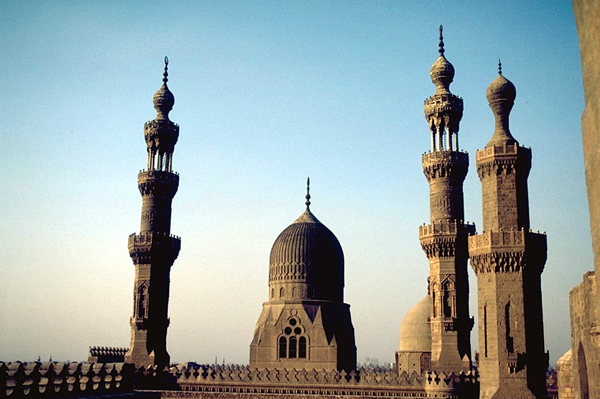
Mountains and rivers, the usual protection and transportation contribute to the safety and prosperity of a city – those are the endorsement from mother nature. When Harold first noticed this magical place, it had been the minarets. Before science conquered most of the world, a religious building is usually the tallest in any city state, with the bell tower overlooking the entire city, and all the while showing respect to whatever gods said city is honoring. He first saw the reflection of the setting sun on the ornamented towers, heard the somewhat illegible war songs brought to him by the wind in the valley. It's all very calm and welcoming, the kind that would make you imagine the kingdom of the elves in Lord of the Rings.  


Think about Troy, before the godforsaken horse; think about Mumbai, a wonderful mess with miraculous order as people suffer and flourish; think about New York City, again, her beggars with decaying limbs on the streets, and billionaires whose snap of fingers might mean an entire industry crumbling down. All are born equal, yet live in incomparable states as if they're in parallel universes with transparent walls in between: both looking at each others' lives without interfering. "Slaves, eunuchs, soldiers, guests, and santons", to this date, and they're now dressed up as taxi drivers, maintenance workers, illegal immigrants, exchange students, business travellers, monks, street merchants and artists, all starving in one way or another.   


Of course, how much they can spend on lunch is not the only factor to differ them, for the kaleidoscopic spectrum of a cosmopolis comes from its diversity in ethnicity, culture, art, craftsmanship, language, fashion... sometimes the only thing that people in a cosmopolis have in common is the desire for fortune and power, and they only thing that link them all is war.


When diversity becomes a common expectation, you stop noticing it and enter a state of numbness. However, the tragic side of the story is that, although sharing space, ethnic groups don't necessarily become friends. Romeo and Juliet still would have died if they had lived in a cosmopolis. One thing to keep in mind is religion. Islamic culture is indubitably a positive factor in the Albanian cosmopolis with the belief of a universal brotherhood. It's condescending to women, but avoids many conflicts between ethnic groups. In New York the dominant party consists of Atheists and Agnostics, with modernized devotees of various sorts – all are tolerant of practices of different religions; blue and white mosques, gothic cathedrals and gold capped temples decorating the streets, offering a bizarre kind of beauty.  


http://eastwestdialogue.org/media/uploads/tbldata_image/0/20121030105406.jpg

It's quite a transcendental experience listening to the night prayers in a Muslim city, even from the vicarious ones I've gotten from movies. Religious are easy answers to unreachable mysteries of the universe, yet also products of human vulnerability. Believe it or not, religions make you feel connected with people who share the same thoughts, wherever they might be. And God, is simply a symbolic we name we gave to all those answers, omnipotent by creation, and non-existent by nature. 

5.4.13

Dita e Veres, Sweet Day of Summer

In the fall of 1809, Lord Byron spent some time in Albania with the notorious tyrant Ali Pasha, and enjoyed many delicatessens thanks to the host’s overwhelming hospitality to a British Lord. The next spring, he spent March and April in Turkey, when Constantinople flourished with pride. The warm weather of Southern Europe makes the countries there enter summer time much earlier than we do here, when April winds are still roaring, bleak cold night and occasional beautiful sunny sky. On March 14th each year, Many Muslim countries celebrate the first day of the year on March 1st according to Julian calendar, but in some area, best known in Albania, people celebrate Dita e Veres (Summer’s Day) on March 14th. There are myths saying that it never rains on that day, which marks the following 6 months of sunlight.


http://medias2.cafebabel.com/15745/thumb/545/-/15745.jpg

Personally I would probably visit Albania one day just for the festivities that day, and knock on wood lest I jinx the never-raining-on-Summers-Day myth For the Dita e Vere celebration, imagine a feast of exotic sounds and vibrant colours that you could lose yourself, drown yourself into. Think about the most extravagant fair you’ve ever been to and expand that to the entire country.

Nobody works, or go to school on Dita e Veres. Dionysus would love it there that day. Thousands of people pour into the streets of Tirana, which would be teamed with an explosion of colourful garlands from daybreak to, probably eternity. You know those street fairs you go to where you buy rubbish and nuisances yet never regretting? Indeed you’re taking in all the joy and memories. If you happened to be in Albania on Dita e Veres one of those days, I expect pictures with you carrying yellow mimosa flowers, wearing them in your hair.

And the food, of course there’s the food! My Middle Eastern friends had always took pride in their heavenly offerings of pastries, those golden coloured, exquisitely crafted little miracles that you feel too astounded to take a first bite when presented.


http://laurenoliviaburke.files.wordpress.com/2011/03/ditaeveres.jpg


Pagan holiday celebrations are like that, because for them it’s paying homage to life and the gods of nature. One of the best discoveries of life and nature is, of course, non other than coffee. You’ll be able to get the aromatic Turkish coffee from booths on Dita e Veres, dark and thick and nothing like the commercialized invention you get from Starbucks, poured in your cups from copper pots. There will be akullore, a type of traditional Albanian ice cream. However, if you can only try one thing, that’d have to be ballokume.


https://blogger.googleusercontent.com/img/b/R29vZ2xl/AVvXsEhE_GjKB44LicMhKNioQ1VvY_fQpZxmQZHwxk5TVKvxtGvMiPkFzpit9a6b7yI0MLOkDHbNVklvqENBJphUqNgdLXKO5BEutipvu9xJqu9SidaUAxrODf733IGFNDPVWYrj6IHvYhjpn7Y/s1600/ballokume.jpg


Ballokume is probably Albania’s favourite elbasanase (dessert), with plain and simple ingredients consisting, you know, the basic elements involved with making cookies, flour, sugar, butter, milk and egg, all the good stuff that generates happy dopamine. One special perk is that ballokume is made of corn meal instead of wheat flour, good news for those who are gluten intolerant. It’s traditionally prepared on Dita e Veres, an Albanian equivalent to the Chinese moon cake on mid-autumn festival, or the American roast turkey on Thanksgiving.

Ingredients:
  • 1lb. corn flour: the leading player that distinguishes ballokume from common cookies
  • Wheat flour: maybe add a little but not a critical role 
  • 1lb. sugar: sugar is life; it’s the source of energy and happiness and the nemesis of weight-loss maniacs 
  • 6.5 oz. butter: another nemesis for the same reason, but I prefer to call butter a symbol of transformation and exaltation, the final step that started with the flow, (milk), to the essence (cream) of life, to a golden monument of excellence.
  • 32 fl. oz. milk: under most circumstances, the first thing a human being tastes after being born is mother’s milk. That says something about our intimate relationship with that opaque coloured liquid and why we still see it an essential part of our omnivorous diet after weaning.
  • 12 eggs: the victim of modern health researchers. While understandable that excessive consumption might lead to discomfort, I doubt eggs are the only contributor to our higher cholesterol average.
  • Lots of love and spirit of festivities. It all counts on your attitude whether your final products are a delicious batch of treasures, or a try of poisonous blobs.

Preparations:
  • Prepare the dough in a large bowl, preferable copper. Warming up is recommended for better results.
  • Preheat the over to 170 Celcius, or 334 Fahrenheit 
  • Mix butter and sugar in the copper bowl. Cream the mixture until it’s frothy and smooth. 
  • Keep stirring and add eggs one at a time to the mixture. 
  • Add cornmeal slowly; try to find the rhythm in the work.
  • After you’re done with the dough, let it sit for about 20 minutes before actually making cookies. 
  • One trick to consider lest aversive result is to test the dough before mass production: take one ball of the dough and set it in the oven. Add more flour if the dough starts to perform excessive stretching. 
  • Now that you’re confident with the cookie dough, start placing small balls onto a baking sheet. Brush butter, splash some flour on top, etc., the usual procedures. 
  • Finally, let the oven do its job and you’ll see the ballokume turn gold, and that’s when you take it out. 
  • Make sure you taste it first before serving the rest of the hungry bunch. 
 http://coollectors.com/upload/5da112f8f21476534df583949baf87ff-m.jpg

This year's Dita e Veres has already past, but the good news is, it seems that New York City has finally reached its loveliest time of the year. It's high time we celebrated Summer's Day right here right now in the spirit of Pagan Festivities. There's always time for cookies and sweets, keep reminding yourselves that, my fellow Sandy survivors. 

20.3.13

II : XLV - XLIX Cleopatra and Ali Pasha in the Vales of Albania

Here on this site Mark Antony and Cleopatra's league succumbed to the force of Augustus, who enlarged the ancient temple of Apollo Actius to memorialize his victory, or better yet, the guy who turned Roman Republic into Roman Empire. He became the heir of what Julius Caesar conquered over Antony, whose relationship was actually closer, being the son of Caesar's cousin.

http://uploads6.wikipaintings.org/images/michelangelo/cleopatra-1534.jpg
Cleopatra by Michelangelo

Now let's talk about Cleopatra, her full title being Cleopatra VII Thea Philopator, the last pharaoh of Ancient Egypt. She shows herself off as the reincarnation of Isis, although actually her family came from Greece, and started their reign over Egypt after the death of Alexander the Great. Unlike her stubborn "Greek to the bone" family, Cleopatra learned to speak Egyptian. In order to solidify her throne, the empress allied with Julius Caesar. They had a son, Caesarion. As far as I'm concerned, this had been quite a political marriage and was done to increase the power on each side.


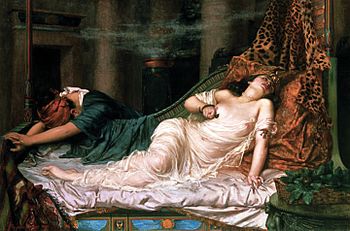
After the assassination of Caesar, Cleopatra aligned with Mark Antony quite naturally for he was supposed to rise to the shrine as the legal heir. Unfortunately Octavianus aka Augustus proved to be better in battle than anyone else. Antony and Cleopatra ended up both committing suicide.

http://upload.wikimedia.org/wikipedia/commons/thumb/d/d9/The_Death_of_Cleopatra_arthur.jpg/350px-The_Death_of_Cleopatra_arthur.jpg

Augustus, after founding Roman Empire, led the country to a period of relative peace until his death at the age of 75. Impressive life span considering the time! There are two sets of his last words. "Behold, I found Rome of clay, and leave her to you of Marble."were the quotes on public documents, while the better known line was "Have I played the part well? Then applaud as I exit."


Groves of Illyria; Dales of Attica; Vales of Tempe; Those were once the favourite hangout places for gods and goddesses like Apollo and Athena. The best advantage of pagan religion is that you can find traces of gods and see the mystified places with your own eyes. It's highly credible when you see the paths Apollo had once take along the river that goes into the Aegean sea, or see the forest where Artemis used to hunt with her sisters.

In the mountains of Parnassus, the oracle of Delphi was pronounced. It was all too easy to believe those fantastical tales and magnificent stories as the glory of nature towering above as your journey carries on.


The Albanian Chief Harold were to meet, was indeed Ali Pasha, the man of Lion that Byron spent some time with in Albania. The infamously cruel and tyrannic ruler of Ottoman Albania was widely known as an alert leader which led Albania against Sultan reign. I'm sure Byron respected what Ali Pasha did and cheerfully accepted his warm welcome and overwhelming gifts and what now, but also disdained his cruelty.
"His Highness is a remorseless tyrant, guilty of the most horrible cruelties, very brave, so good a general that they call him the Mahometan Buonaparte ... but as barbarous as he is successful, roasting rebels, etc, etc.."
In a letter dated Nov. 18th, 1809, Byron included such words to his mother after greeting the notorious ruler. There is, still, some indication of admiration between the lines, as we remember the poet's personal hero Napoleon Bonaparte, became a legendary name Ali Pasha got crowned with.


In Travels In Albania and Other Provinces of Turkey in 1809 & 1810, John Cam Hobhouse also talked about the monks they met in the mountains. Here's a clip from the book:


The 20 something young hermit told the travelers about the life in the monastery, as the conscientious Hobhouse listened in astonishment. Byron would have had a different perspective, having mentioned several convents in the mountains, etc. in the previous canto. See my post about Convento Dos Capuchos in A Laughable Disgrace (Canto I: XXI-XXVI). 


The rude caloyer here, of course, was the same one who threw rocks to anyone who interferes with him and wouldn't talk to anyone all day long. He tends his herds and minds his own business, completely becomes one with nature. An eccentric being to most people, he is indeed living as freely as he wishes... the kind of delight he holds in his heart wouldn't be understood save for few.

14.3.13

II : XLII - XLIV The Lone Eagle and the Wolfpack

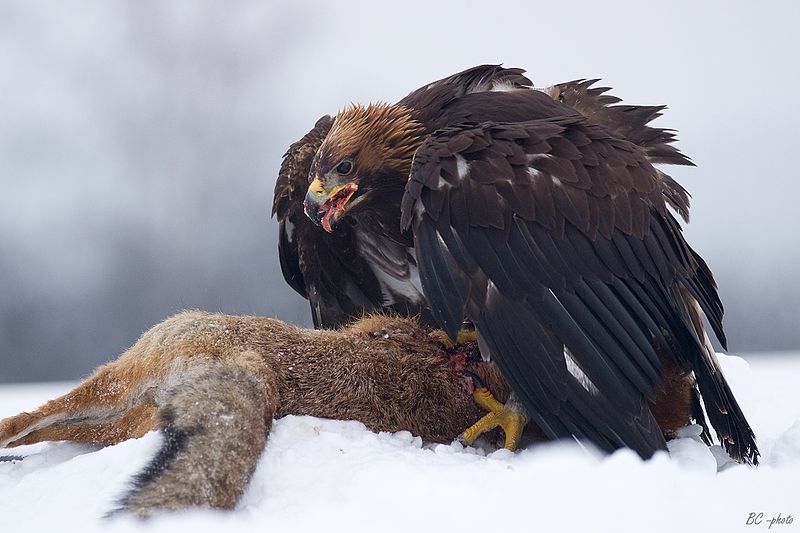
If the land of Greece is a giant, then the Pindus is the spine, standing between Greece and Albania.  There are animals in the wilderness of the mountains. The beautiful Aquila chrysaetos (golden eagle) spreads its wings, swoops down with its sharpened beak, snatching a gray wolf (Canis Lupus) by its neck. Crimes of the natural world keep in check the balance in the animal kingdom. So we forgive the killing, and tell the tales of the lonely hunter and the nomadic travellers. 

And so they became symbols, emblemed on seals and armors, reminding humanity our roots.

The golden eagles, such gorgeous and dangerous species, are wildly admired. They travel alone, and prey on equally capable rivals, like the witty foxes or the cunning wolves. They eye on the target, and never let go once they've set their goals. There are men and women throughout history, fictional or not, who would remind me as the golden eagle: Joyce, eccentric he might have been, was a man of grand ambitions. Inspired by Odysseus, the Irish poet wrote the incomparable Ulysses, hence his self exile got on some pigments of legendary as well. 

File:Aquila chrysaetos 1 (Bohuš Číčel).jpg


T'is most lonesome when you feel a discrepancy in communication. Harold obviously couldn't find understanding from either the Christian or the people on the unknown shore. The golden eagle, although suitably present, the symbol of Albania, is also a universal motif representing a sense of pride, and the loneliness brought upon to that pride. Byron himself was one of those "eagle people": he's learned much from the past, which made him understand how limit he is in making a difference; he walked the walk of a pilgrim in search of art in its purist form. He's lamented the falling of empires in previous lifetimes, and paid homage to the ancient bards who sang the songs of heros and tragedies.  


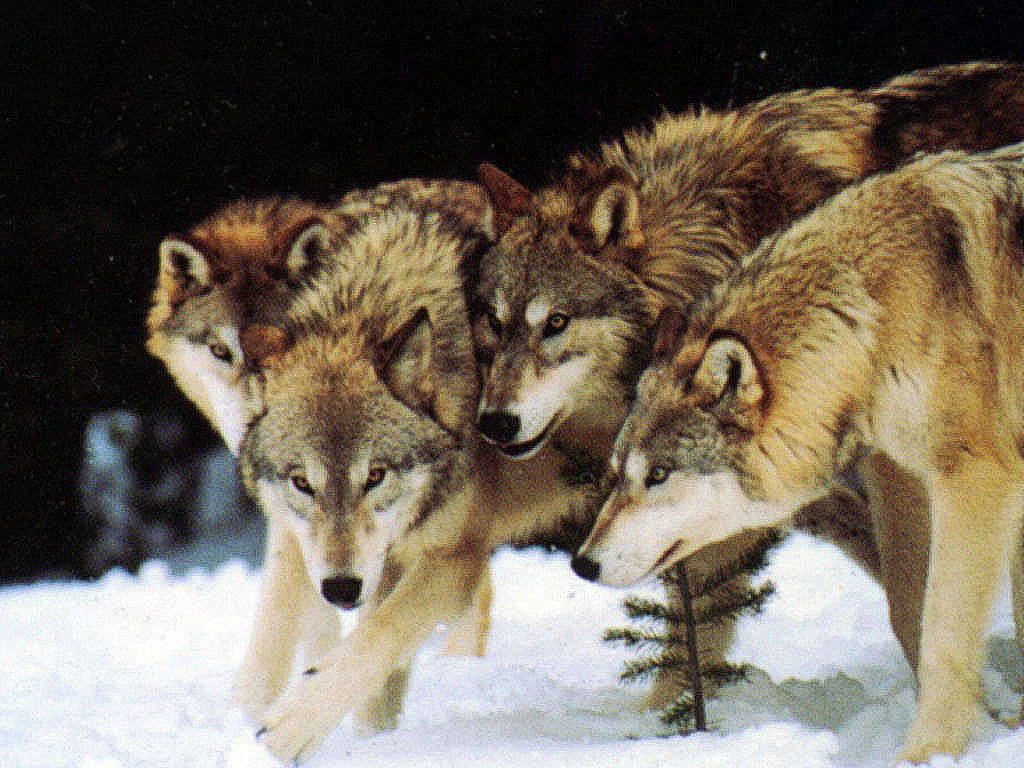
The wolfpacks are different. They move from one place to another, sweeping across the plains and down the mountains. They're powerless against the eagle but together, they are relentless creatures and have always been feared. They are the embodiment of human's primal desires and violent nature.

There are various misunderstandings with the wolves. They are said to be killers without conscience and yet, they've also been known as foster parents of abandoned children. There are magnificent epic films like Dance with Wolf showing the beauty of the canine and their intimacy with mother nature. There are also tales of a more mythical theme: the werewolves comes with the flight of the night. Their howls under the full moon are the sound of  terror.

Yet I've always pictured the wolfpack in a field of golden corn flowers, their speed swift like wind, going back to their rest. Sometimes they'd disturb the birds, who fly off across the stream, ruffling the quite surface of the water.

They stick to their tribes, with their sets of regulations. They fight amongst themselves although the same species. They rip apart each other's fur, break each other's limbs in combats, trying to secure a bit more of the territory.


Isn't that just like men?

People put up images of animals as their totems, their emblems, their symbols of beliefs. They also create stories of animals with either encouraging messages or serve as warnings, telling children to stay at home, and not to take risks. I wonder how much do the wolfpack remind people of themselves. The kills carry on.

There are always people who are like the golden eagle, flying above all, soaring up like Icarus to the sun. It's a cold and lonely place up there, although it seems that they're blazed in the glorious sunlight.

The possession of knowledge can make one quite lonely. To pull yourself apart from a pack, watching over with the understanding of how things are.

To be the golden eagle or to be a wolf in the pack, neither is easy; it's just a choice one makes.

7.3.13

II : XXXVI - XLI Flowers of Love and War

Entering 19th Century, the power of what used to the Ottoman Empire was diminishing. Albania had been taken over since the end of 14th, and would be under Islamic/Turkish control for another 100 years until the blooming of Albanian nationalism. Beautiful country it is, Albania has been famous for her fearless warriors. Those are the brave ones who managed to keep their identity by escaping to Italy, Egypt, and other surrounding countries. 

File:Albania state emblem.svg
State Emblem of Albania

It only makes sense that we are now heading towards Albania, the country of both Islamic and Christian background. On the other hand, being a land historically occupied by both the Greeks and the Turks, Albania has witnessed a past of conflict between the two distinct races.  


Mother nature is generous to Albania. The country has a wealth of extraordinary fossils and rare animal species, some of the most beautiful and unusual, for example, the golden eagle (the country's national symbol), and the Balkan Lynx. Besides biological resources, 1/3 of the land is covered by forestry, and that is indubitably a fortune.

File:Lynx lynx poing.jpg
Lynx

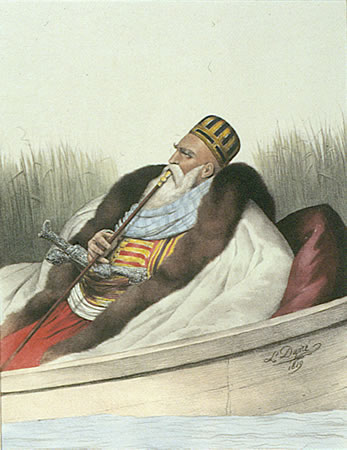
When Byron landed Albania, the country was still subordinated to Turkish control, Ali Pasha being its ruler at the time, who was extremely hospitable to his guests, sending them gifts frequently and hosting feasts each night. The poet and his entourage spent some grand time there. He also had a lot of time to emulate the journey he had had up to that point, getting ready to start penning Childe Harold's story.
File:Dupré - Ali Pasha.jpg
Ali Pasha


There's this guy who managed to take Albania back from the Turks, well at least for a while. His name is George Kastrioti Skanderbeg (Iskander Bey, which means, literally, lord Alexander); usually people know him as simply Skanderbeg.  Think of him as someone without whom Albania wouldn't exist today. While working for the Ottoman Empire as a governor, Skanderbeg organized a rebellian military force against the Turks, bringing Christianity back to Albania. Ask anyone from that country to name you a national hero, they'll probably give you Skanderbeg, the men whose army won more than 20 battles against Ottoman force. Vivaldi wrote an opera based on his story; Byron was merely one of the many poets who wrote odes to Skanderbeg.

Henry Wadsworth Longfellow's Scanderbere revealed the characters of the hero quite vividly, as in:

Anon from the castle walls
The crescent banner falls,        150
And the crowd beholds instead,
Like a portent in the sky,
Iskander’s banner fly,
The Black Eagle with double head;
And a shout ascends on high,        155
For men’s souls are tired of the Turks,
And their wicked ways and works,
That have made of Ak-Hissar
A city of the plague;
And the loud, exultant cry        160
That echoes wide and far
Is: “Long live Scanderbeg!”
 
It was thus Iskander came
Once more unto his own;
And the tidings, like the flame        165
Of a conflagration blown
By the winds of summer, ran,
Till the land was in a blaze,
And the cities far and near,
Sayeth Ben Joshua Ben Meir,        170
In his Book of the Words of the Days,
“Were taken as a man
Would take the tip of his ear.”

During times of its struggle and sorrow, a nation calls for a hero. It takes a lot of courage to be a hero, for the individual must face not only the demanding task of leading the crowd, but also the burden of accusation from those who misunderstand. It's a risky business to be the only who rise up from the crowd. It's never easy to be a leader, for the individual must take up to be responsible for all the followers. The leader's decision can affect too many lives to be taken lightly. Today we write stories about superman and extraordinary individuals who possess distinguished powers; they are the modern time saviours of our society who fight the crimes and intruders and eventually ride off into the sunset, mostly go on without attachment to family. Joseph Campbell calls it monomyth because we all hope someone would rise up above all to be the one who leads., yet rarely does anyone actually take on the job themselves. We all have too much to lose.


War and Love usually come in pair. It's no wonder: just look at the most celebrated and scandalous love affair of all time, the one between Ares and Aphrodite. The goddess of love is unsatisfied with her insufferably dull marriage with the crippled god of fire Hephaestus, so she started seeing the god of war, secret rendezvous and what not. Logical or not, the point is, from the soil that the flowers of war grow, blossoms love as well.

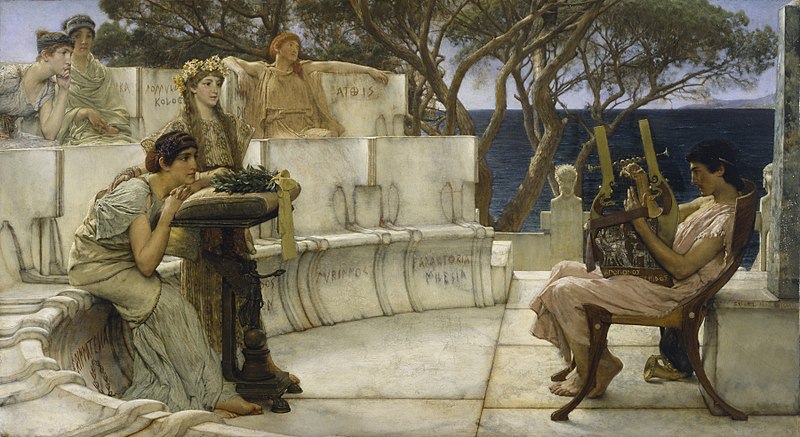
Sappho, Greek lyric poet, or better still, the girl who inspired generations to come; or BETTER STILL, the woman called "the tenth muse" by Plato. Most of her life that we know of are just fragments and traces we estimate from her surviving poetry pieces. I was first introduced to her work by Aaron Poochigian's translation of Stung with Love: Poems and Fragments by Sappho.

File:Sir Lawrence Alma-Tadema, RA, OM - Sappho and Alcaeus - Walters 37159.jpg
Sappho and Alcaeus by Lawrence Alma-Tadema

The kind of love described in Sappho, is no doubt a bigger kind than the heterosexual one in a traditional sense, which ironically made Sappho become earliest example of homosexuality in female, the words sapphic and lesbian being derived from her name and birth place. Scholars suggested that Sappho's love is similar to what was described by Socrates: a universal love that has nothing to do with the attraction between sexes; an appreciation towards all things beautiful, which is the origin of love.

Lefkada, or Leucadia, is the place where Sappho committed suicide. It's also believed to be the original place of Ithaca in Odyssey. According to legends, this island in the middle of Ionian sea is dear to Aphrodite. At the spot from which Sappho fleet to meet her fate, the poet recounted the battles that costed lives and honour. 

Battle of Actium opened the struggle between Octavian and Anthony. Historians lead us to believe in Cleopatra's role in this war as a woman more than her role as a Pharaoh because the affair between her and Mark Anthony somewhat caused the final war of Roman Republic, after which the Egyptians enjoyed a long period (207 years) of Pax Romana.   

Battle of Lepanto, mourned by the Ottoman Empire and cheered by the Christians. Although the victory on the Christian side wasn't an apparent turning point for the course of history, it raised morale and, looking back it from a larger scale, it had been the battle that turned the course around. The Christian navy captured experienced Turkish sailor with superior naval skills and knowledges. They had losses afterwards, but Lepanto was an invisible beginning to the downfall of the Ottoman Empire.
File:Trafalgar, ships scattered.jpg
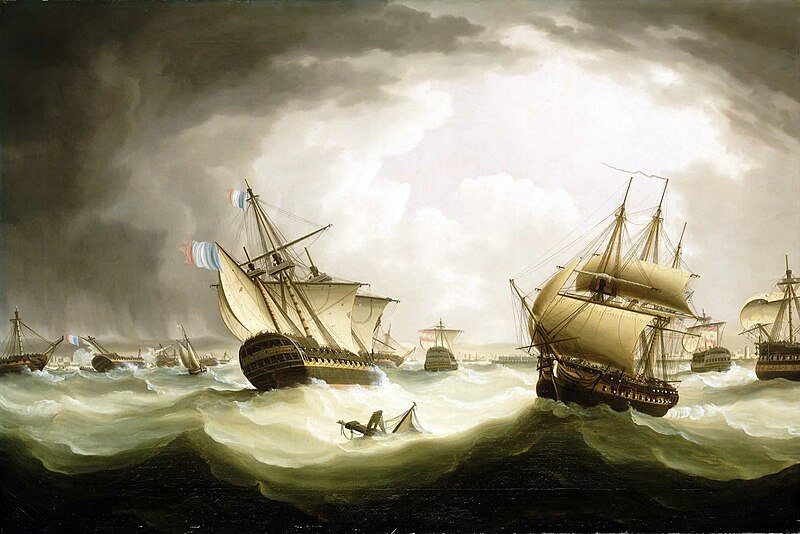
After the Battle of Trafalgar

Battle of Trafalgar, had been more recent to the poet than anything else. England, France and Spain, all out with their vast league of fleets, met at the cape of Trafalgar. This battle ended the French Naval's challenge to the Royal Navy of Britain, although it'd still take another decade for the Napoleon war to cease. 


Those battles, varied in scales and origins as well as the historical backgrounds, share some underlying connections. Obviously they're all naval combats, which is how Leucadia Cape reminded Byron of them. All of them had been subtle turning point of the war of a larger scale. As you can see, the unpredictable nature of history usually make all the contemporary mad with fear and agression, and only 100 years from the present can we figure out a logic connection between events.

Of course, a shortcut would be to understand history, for everything you need to learn about now or the future, you can learn the pattern from the past. 


She sings about love, of the most passionate kind, living at a time of war and turbulence. She dies, or rather, falls from the cliff of time, plunging into the mote of history. In her poem she talks about being remembered and thought of by someone in the future, calling for her lover to stand on her side, to fight as her comrades in all the battles. Her words are the lyrical presentation of how love is stronger than war. It's ironic that throughout history, love appeared to be, many a time, the cause of wars, but that doesn't discredit its power to end the wars.

This particular one of Sappho's few surviving fragments is perfect for the occasion:

“Some say an army of horsemen,
some of footsoldiers, some of ships,
is the fairest thing on the black earth,
but I say it is what one loves.

It's very easy to make this clear
to everyone, for Helen,
by far surpassing mortals in beauty,
left the best of all husbands

and sailed to Troy,
mindful of neither her child
nor her dear parents, but
with one glimpse she was seduced by

Aphrodite. For easily bent...
and nimbly...[missing text]...
has reminded me now
of Anactoria who is not here;

I would much prefer to see the lovely
way she walks and the radiant glance of her face
than the war-chariots of the Lydians or
their footsoldiers in arms.” 
― Sappho