Showing posts with label war. Show all posts

2.5.13

II : "Tambourgi! Tambourgi! thy larum afar"

Growing up, I used to go to all kinds of military trainings at school as part of the political, cultural or who knows whatever kind of programs. I didn't care the least bit about the ideals, or ever looked forward to the ever so boring disciplinary routines: we would go to a training center in a park-like "resort" in the suburbs of Shanghai, where we'd march down the bridge in uniforms, and practice how to use a rifle... as if that'd ever be practical knowledge in your life. Of course, there's always something to look forward to, and the campfire nights are certainly in that category. The entire class of, well, class of 2008 if I remember it correctly, would be called a battalion, and each class a platoon. I'm not an expert on military terminologies, but you get the picture. The entire battalion, as I was saying, would sit in the square, each platoon occupying their own designated area. In the center of the square there's a gorgeous campfire, and we'd just stare at it all night; and there were performances from each group; and at the peak of the night, we'd start to sing. First each group their own songs, one by one, and gradually it becomes a unison of chanting, of something we all know, a melody engraved in our hearts whether you like it or not. Those are mostly songs from war times, with lyrics that no longer make much sense today other than something metaphorical, but sometimes they still make waves of emotions surge up inside of you, and make your spirits high.

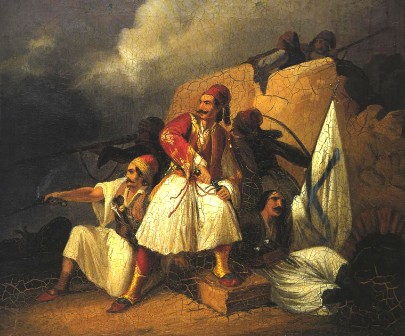
 http://www.smatsuk.yolasite.com/resources/Souliotes.jpg.opt405x336o0,0s405x336.jpg

I remember moments like that in my childhood, and moments like that in motion pictures. One of them, when I say it you'll recognize, was when those people all starting singing La Marseillaise in Casablanca. It's an emotional moment that makes you shed tears even if you're not French. And then there's that moment when the dwarfs sang in unison in the Hobbit. Their voices are almost as low as the center of earth, which makes you feel as if the memories of your past lives are flashing back right in front of your eyes, and the images of your ancestors fighting in the battle fields, relieved all over again.


Then there's the Souliotes' war song Byron offered, a complete translation of what he heard on that peaceful night after a stormy sail. Those "barbarians" with dark skin and wild locks and nimble limbs, chanting and calling out to the gods and to each other: it's war, war, hatred to the enemies and love to the comrades. In the miniseries version of Byron, which I mentioned before in previous posts, there's a modern rendition of Tambourgi, re-imagined by the screenwriter and director in order to recreate that moment that Byron remembered so well, which eventually carried him back to the shore on which he heard that song. I sincerely believe that the moment when Byron first heard the strange war song he couldn't entirely understand, is when he first felt a sense of belonging, a sense of serenity after all those years out on the sea and faraway from home.


It's not certain what the original tune would be like, but why does it matter? There are songs that doesn't requite a melody, but rather flow in the collective unconscious of human kind. it's also not certain whether the translation is entirely accurate. I'd like to believe that it's a combination of the original words and Byron's own reflection through his experience. If you read those words, it's quite understandable why Childe Harold's pilgrimage was considered controversial and threatening when it was first published in England. Giaours? Who would dare to use the word Giaours in the society where the church dominates political power?

There's a derogatory word for every race possible. People use them to drive away their own fear and cover up some levels of ignorance.


I doubt that common soldiers in the Souliotes tribe would sing specifically about Ali Pasha or the chieftain's weapon. Imagination can put words into moments in our memories, making songs personal to each one of us. Byron never forgot that song which turned his fear towards the Souliotes into understanding, and then respect. It's a strange yet not-so-uncommon thing to experience bonding with complete strangers with a culture you can hardly figure out... although today we call it democracy.

1.5.13

II : LXVII - LXXII On a Distant Shore with a Wild Heart

It was long ago and far away; it was a community united by war and despair, speaking an extinct dialect, surrounded by an aura of danger and mischief. It's a group of barbarians, or so they called them, band of misfits, blood thirsty bandits, and their existence threatens the weary sailors who happened to reach the shore where the Souliotes reside.

https://upload.wikimedia.org/wikipedia/en/7/78/Deux_%CE%B9tudes_de_costumes_souliotes.JPG

Childe Harold wasn't too crazy about those legends of Souliotes: those outcasts of both Greek and Albanian societies, expelled and had nowhere else to go; they are the Robinhoods on the shore, dancing and singing war songs around the campfire. Maybe they'd even kill their prisoners and drink their blood, like how they are described in stories. Simply put, Suli was the last place Childe Harold would willingly be if he had any other choices. And for the first time since he took off, for the first time during his turbulent voyage, he was scared. He felt a shiver down his spine as he feels his damp clothes, as he struggles to keep his weary eyes open.

They're about to anchor, and the rest is at the mercy of fate.


Coming just from Ali Pasha's hub, personally I wouldn't know what to think approaching the Souliotes. This pitiful group of outlaws have been in conflict with the tyrannic ruler since 1803, and there doesn't seem to be a perceivable end. Comparing the two sides, anyone would feel sympathetic to the Souliotes: these are the soldiers without proper food or equipments, whereas Ali Pasha, as we now know very well, is having it all: his luxurious lifestyle, his relentless spending... He was respectful to Lord Byron, we'd learnt about that, but him being hospitable couldn't change Byron's contempt towards him. As for the Childe, he's mostly overwhelmed by the journey by now. The crust of waves pushed his ship up and dragged him down as if to the depth of hell. And when the spirit is low and the body has succumbed to exhaustion, all one asks for is some stillness.


https://blogger.googleusercontent.com/img/b/R29vZ2xl/AVvXsEhAs-7I9_Hwcrt_VZD6E5rgz2RIIBR-4C7L27l-AC7qo-bjRAqGlxcPneZYSaWi5WT8tpW2USuTUi26nHji8ZJ-lXU9sFGD_cZpGDfCcAEs1ofGrALoJbHNl-RUaD-tzN_tBvF7QU5Q3WZ4/s1600/tromaktiko12.jpg


Suli had been the least likely place for Harold to get his blissful rest. But he, along with everyone else on the ship, was surprised by the locals who offered the Childe not only kindness but also stirred up his curiosity, restored his spirit. (It's quite believable that this experience led to Byron's eventual leading in the Greek Independence War, but that's thereby another story.)


It's rather tricky, the work of our hearts. We always feel the most fondness towards those who happened to reach out to us and lend us a hand when we're at rock bottom, even when they're the most unlikely bunch of people we'd make friends with. In universal sorrow we make the strongest bond and form the greatest friendship, though sometimes incomprehensible to the distant spectators. It's all in perspective.

Harold sees unfamiliar faces on people who speak an entirely different language, wearing strange costumes and moving in ways, the meaning of which he couldn't quite grasp. But their kindness opened his heart and he found beauty in their ugliness, forgiving their ungentle characteristics and perceived their vulgar nature as simply something he's yet to familiarize.

In a world without prejudice and hostility, the construction of babel tower would be simple task.


At dusk Harold joins the Souliotes for their feast. The local break out a banquet for the guests from a faraway land, who talks and dresses in a way they wouldn't even try to understand. Their intentions were simple, though might not be understood by the cynical, overly sophisticated minds from "civilized societies": to feed the hungry, to sooth the tired, to care for the poor in spirit, to be merry at the simple happiness and to celebrate the victories in protecting their land.

http://upload.wikimedia.org/wikipedia/commons/e/e5/Souliotes_19th_century_painting.jpg


Sometimes we claim to look at different cultures and different people of the world with an open mind, yet we wears filters through which we speculate the world we live in too much, too constantly that we forgot about them. It takes a lot of courage to rip them off and cast away the standards we're all too familiar with when taking in something new and initially hard to swallow. I guess Harold's situation makes it easier for him, on a distant shore with a wild heart, when there's nowhere else he can turn to.


The Souliotes chant their song as if it's a spell. No doubt they sing it to the gods they worship, but they mostly sing it to themselves, to forget about their tragedies, to sooth their wounds, to gather their courage and to fight on when the sun comes up in the morning.


Byron included a complete translation of the Souliotes' war song in Canto II, which I'll talk more about in the next post. Stay tuned and we'll meet again soon.

17.4.13

II : LX - LXVI Things Don't Change That Much (Unless We Do)

Ramazani = Ramadan

I often find fasting as an observation of a certain religion excruciatingly obscure. During Ramadan, the 9th month of Islamic calendar (it varies every year but happens somewhere around November), devotees refrain from eating, drinking, or any other means of pleasure from dawn to sundown. And then, described by our poet, is followed by a pomp of celebration at night, at least in the house of Ali Pasha.

http://www.webmastergrade.com/wp-content/uploads/2011/08/Ramadan-Mubarak-Wallpaper.jpg

People practice fasting across cultures and religions, and for the most part, consists of an endurable length and is followed by excessive consumption of food and alcohol when the "fasting" is over. It's hands down ironic and hypocritical if you ask me. Isn't moderation the key to finding enlightenment of the soul and getting closer to the spiritual awakening? Fasting is truly for the purpose of remembering the suffering and cherishing what we are bestowed by the world. It should be rewarding, spiritually and mentally, the result of which shouldn't be cancelled by wanton zest.


Sometimes things don't change for the better. There are women whose eyes are covered under black veils although their spirits are of rainbow colours. I remember watching Persepolis, in which through the perspective of an Iranian girl, we see a whole world crumble because of war and rotten traditions. A world dominated by male and a tyrannic government. There are images from the not-so-distant-history that can make your heart ache. 

Persepolis HD wallpaper (click to view)

People make sacrifices in life. In some religions sacrifices are considered the accumulated points for one's afterlife, as though the fasting, for example,  they accomplished during their lifetime will become feasts when they enter Elysium.


Women are defaced, considered possessions, objects of the men in power. They were deprived of their voices, their freedom of making choices in life, their individuality, their power of saying no. It's such sorrow, and simultaneously quite moving to see Islamic women who have taken up so much weight on their shoulders because of a life destined for them since birth. For a long time they have been creatures of pleasure when men needed them, they have been servants and slaves of the houses, yet have never been asked for when opinions are needed to be heard. There isn't any equality, for nothing has been questioned. Everything seemed so common, everything in place and life goes on. Those enslaved women don't even know they deserved much, much more.   


Ali Pasha's feast comes night after night as he sent to Byron many a rarities to be enjoyed. There had been exotic beauties and local tunes strange to foreign ears.  The old man is feared by all because of his status, not because of his personal strength. Tyrants enjoy their oppressions when the oppressed are ignorant of their fate. The most tragic society is not one that is in chaos, but one that seems calm, and discrepancies between classes becomes a norm.


In God's words they rule! Those tyrants never change. In the past it had been different religions: east and west, here and there. They tell their people that they were sent by the gods, and are divinely employed to be the dictators. Today those tyrants got other jobs. They runs corporations with net worth of multiple billions. There's less blood and violence, and they've also got  


There are pictures from the battlefields: the young and the absent minded, answering their calls of duty, picking up riffles and kill for the glory of their armors. They then go back to their mothers no longer children, but monsters with unimaginable pasts, or worse, if the war was taken by pride rather than shame.


There are pictures from the war zones: the young and the innocent, their faces stained by blood and dirt; they lie in the trenches, trembling with fear, with love for their homeland and hatred towards the enemies. On the other side, the a similar group of youth, darlings to their own mothers and siblings. Their only differences are the shapes of their helmets and the patterns on their coats.

Those pictures are still their today on CNN and BBC...


My macbook pro, like the chieftain's tower, is a shield between reality and elements of tragedies that seem so far away. These are the trophies of peace and crowns of silicon accomplishments.

Yet we hear gunshots and bombings from merely miles away, and people are calling out in pain and living in fear. The danger and destruction are closer than ever: a world partially maniac, partially depressed.

Childe Harolds are everywhere, watching the barbarians destroying the beautiful, all at loss what to do. There's a always another cycle of awakening and redemption – the ray of hopefulness is saying: it's time to pick ourselves up. Things will never change, until we write our own history.

7.3.13

II : XXXVI - XLI Flowers of Love and War

Entering 19th Century, the power of what used to the Ottoman Empire was diminishing. Albania had been taken over since the end of 14th, and would be under Islamic/Turkish control for another 100 years until the blooming of Albanian nationalism. Beautiful country it is, Albania has been famous for her fearless warriors. Those are the brave ones who managed to keep their identity by escaping to Italy, Egypt, and other surrounding countries. 

File:Albania state emblem.svg
State Emblem of Albania

It only makes sense that we are now heading towards Albania, the country of both Islamic and Christian background. On the other hand, being a land historically occupied by both the Greeks and the Turks, Albania has witnessed a past of conflict between the two distinct races.  


Mother nature is generous to Albania. The country has a wealth of extraordinary fossils and rare animal species, some of the most beautiful and unusual, for example, the golden eagle (the country's national symbol), and the Balkan Lynx. Besides biological resources, 1/3 of the land is covered by forestry, and that is indubitably a fortune.

File:Lynx lynx poing.jpg
Lynx

When Byron landed Albania, the country was still subordinated to Turkish control, Ali Pasha being its ruler at the time, who was extremely hospitable to his guests, sending them gifts frequently and hosting feasts each night. The poet and his entourage spent some grand time there. He also had a lot of time to emulate the journey he had had up to that point, getting ready to start penning Childe Harold's story.
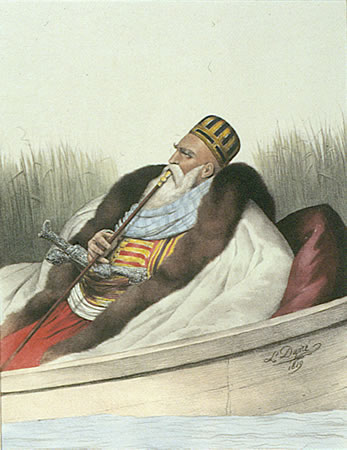
File:Dupré - Ali Pasha.jpg
Ali Pasha


There's this guy who managed to take Albania back from the Turks, well at least for a while. His name is George Kastrioti Skanderbeg (Iskander Bey, which means, literally, lord Alexander); usually people know him as simply Skanderbeg.  Think of him as someone without whom Albania wouldn't exist today. While working for the Ottoman Empire as a governor, Skanderbeg organized a rebellian military force against the Turks, bringing Christianity back to Albania. Ask anyone from that country to name you a national hero, they'll probably give you Skanderbeg, the men whose army won more than 20 battles against Ottoman force. Vivaldi wrote an opera based on his story; Byron was merely one of the many poets who wrote odes to Skanderbeg.

Henry Wadsworth Longfellow's Scanderbere revealed the characters of the hero quite vividly, as in:

Anon from the castle walls
The crescent banner falls,        150
And the crowd beholds instead,
Like a portent in the sky,
Iskander’s banner fly,
The Black Eagle with double head;
And a shout ascends on high,        155
For men’s souls are tired of the Turks,
And their wicked ways and works,
That have made of Ak-Hissar
A city of the plague;
And the loud, exultant cry        160
That echoes wide and far
Is: “Long live Scanderbeg!”
 
It was thus Iskander came
Once more unto his own;
And the tidings, like the flame        165
Of a conflagration blown
By the winds of summer, ran,
Till the land was in a blaze,
And the cities far and near,
Sayeth Ben Joshua Ben Meir,        170
In his Book of the Words of the Days,
“Were taken as a man
Would take the tip of his ear.”

During times of its struggle and sorrow, a nation calls for a hero. It takes a lot of courage to be a hero, for the individual must face not only the demanding task of leading the crowd, but also the burden of accusation from those who misunderstand. It's a risky business to be the only who rise up from the crowd. It's never easy to be a leader, for the individual must take up to be responsible for all the followers. The leader's decision can affect too many lives to be taken lightly. Today we write stories about superman and extraordinary individuals who possess distinguished powers; they are the modern time saviours of our society who fight the crimes and intruders and eventually ride off into the sunset, mostly go on without attachment to family. Joseph Campbell calls it monomyth because we all hope someone would rise up above all to be the one who leads., yet rarely does anyone actually take on the job themselves. We all have too much to lose.


War and Love usually come in pair. It's no wonder: just look at the most celebrated and scandalous love affair of all time, the one between Ares and Aphrodite. The goddess of love is unsatisfied with her insufferably dull marriage with the crippled god of fire Hephaestus, so she started seeing the god of war, secret rendezvous and what not. Logical or not, the point is, from the soil that the flowers of war grow, blossoms love as well.

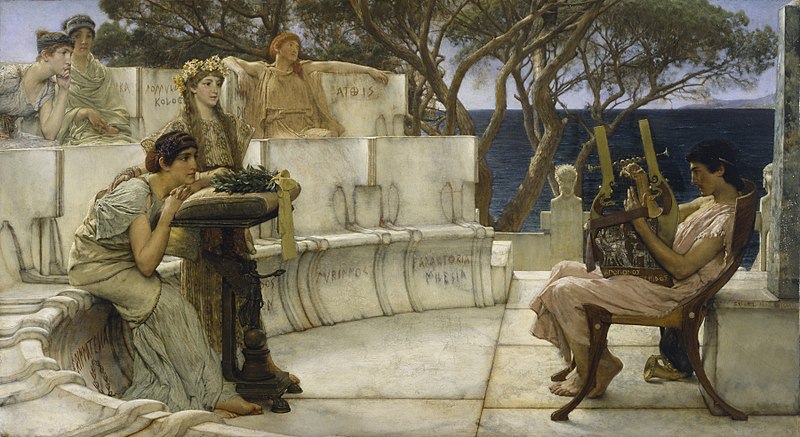
Sappho, Greek lyric poet, or better still, the girl who inspired generations to come; or BETTER STILL, the woman called "the tenth muse" by Plato. Most of her life that we know of are just fragments and traces we estimate from her surviving poetry pieces. I was first introduced to her work by Aaron Poochigian's translation of Stung with Love: Poems and Fragments by Sappho.

File:Sir Lawrence Alma-Tadema, RA, OM - Sappho and Alcaeus - Walters 37159.jpg
Sappho and Alcaeus by Lawrence Alma-Tadema

The kind of love described in Sappho, is no doubt a bigger kind than the heterosexual one in a traditional sense, which ironically made Sappho become earliest example of homosexuality in female, the words sapphic and lesbian being derived from her name and birth place. Scholars suggested that Sappho's love is similar to what was described by Socrates: a universal love that has nothing to do with the attraction between sexes; an appreciation towards all things beautiful, which is the origin of love.

Lefkada, or Leucadia, is the place where Sappho committed suicide. It's also believed to be the original place of Ithaca in Odyssey. According to legends, this island in the middle of Ionian sea is dear to Aphrodite. At the spot from which Sappho fleet to meet her fate, the poet recounted the battles that costed lives and honour. 

Battle of Actium opened the struggle between Octavian and Anthony. Historians lead us to believe in Cleopatra's role in this war as a woman more than her role as a Pharaoh because the affair between her and Mark Anthony somewhat caused the final war of Roman Republic, after which the Egyptians enjoyed a long period (207 years) of Pax Romana.   

Battle of Lepanto, mourned by the Ottoman Empire and cheered by the Christians. Although the victory on the Christian side wasn't an apparent turning point for the course of history, it raised morale and, looking back it from a larger scale, it had been the battle that turned the course around. The Christian navy captured experienced Turkish sailor with superior naval skills and knowledges. They had losses afterwards, but Lepanto was an invisible beginning to the downfall of the Ottoman Empire.
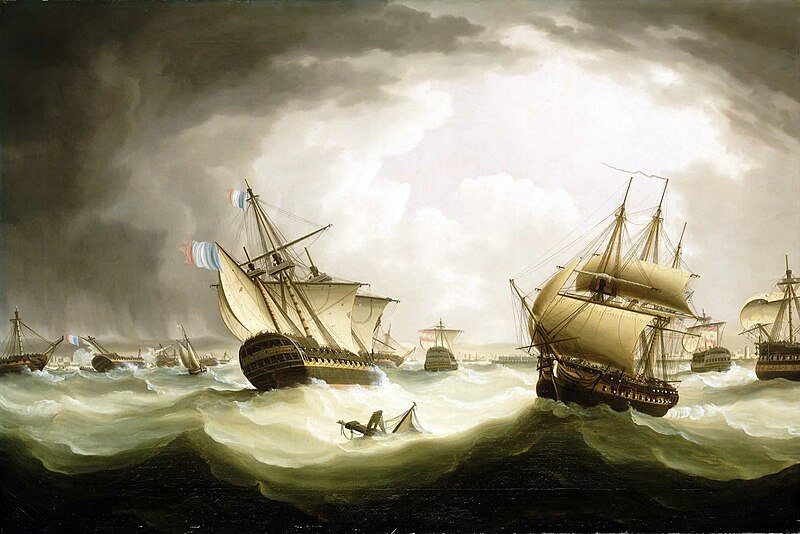
File:Trafalgar, ships scattered.jpg
After the Battle of Trafalgar

Battle of Trafalgar, had been more recent to the poet than anything else. England, France and Spain, all out with their vast league of fleets, met at the cape of Trafalgar. This battle ended the French Naval's challenge to the Royal Navy of Britain, although it'd still take another decade for the Napoleon war to cease. 


Those battles, varied in scales and origins as well as the historical backgrounds, share some underlying connections. Obviously they're all naval combats, which is how Leucadia Cape reminded Byron of them. All of them had been subtle turning point of the war of a larger scale. As you can see, the unpredictable nature of history usually make all the contemporary mad with fear and agression, and only 100 years from the present can we figure out a logic connection between events.

Of course, a shortcut would be to understand history, for everything you need to learn about now or the future, you can learn the pattern from the past. 


She sings about love, of the most passionate kind, living at a time of war and turbulence. She dies, or rather, falls from the cliff of time, plunging into the mote of history. In her poem she talks about being remembered and thought of by someone in the future, calling for her lover to stand on her side, to fight as her comrades in all the battles. Her words are the lyrical presentation of how love is stronger than war. It's ironic that throughout history, love appeared to be, many a time, the cause of wars, but that doesn't discredit its power to end the wars.

This particular one of Sappho's few surviving fragments is perfect for the occasion:

“Some say an army of horsemen,
some of footsoldiers, some of ships,
is the fairest thing on the black earth,
but I say it is what one loves.

It's very easy to make this clear
to everyone, for Helen,
by far surpassing mortals in beauty,
left the best of all husbands

and sailed to Troy,
mindful of neither her child
nor her dear parents, but
with one glimpse she was seduced by

Aphrodite. For easily bent...
and nimbly...[missing text]...
has reminded me now
of Anactoria who is not here;

I would much prefer to see the lovely
way she walks and the radiant glance of her face
than the war-chariots of the Lydians or
their footsoldiers in arms.” 
― Sappho  
21.2.13

I : LXXXIX - XCII Spain: A History of Violence

The Spaniards, the French and the Dutch all helped America during the Revolutionary War. On the 3rd of Sep. 1783, The Treaty of Paris ended the tedious war that crossed several continents and prolonged for almost a decade after United States had already declared its independence on 4th of July, 1776, the glorious date that you're supposed to remember as long as you're a citizen of planet earth and believe in liberty of humanity. Anyway, it almost seemed to me that the American Revolutionary War inspired the French Revolution, which broke out as early as in 1791, although most of us attributed the year of 1793 of more importance during the progress of the war, during which a young Napoleon Bonaparte proved his worth for the first time. 

Everything that happened was connected, dare I say, especially since the world is getting smaller as men's ambition and thirst for power grows infinitely bigger, and of course, communication is made more convenient. The rise of Lady Liberty indubitably influenced the entirety of western civilization. (The statue physically rose in 1886 but since it's commemorating 1776 in the first place, let's pretend that Lady Liberty had already been there in spirit.)

File:ColumbiaStahrArtwork.jpg
A modern personification of United States (Columbia) during WWI 

Columbia had been the name for a land with which we associate freedom, after the guy who discovered her of course, Christopher Columbus, whose accomplishment initiated the Spanish colonization of the new world. 


So why is that part of the history relevant to our subject of discussion now? Obviously there's the connection of the Spanish Empire, but it's far more than just a name. The War of Pyrenees, or better known as the Great War, pitted the first coalition during the French Revolutionary Wars. After the initial outbreak in January, France got in full on attack mode and in two months' time, decided to break up with her long-term-ally Spain. Spain was miserably defeated. 

Francisco Pizarro

There's almost a bitterness in the poet's tone. Francisco, Gonzalo, Juan and Hernando, those are the names of the Pizarro brothers, their reign in Peru was quite short (1531-1538) but still a major part in the Spanish conquest of the new world, Quito (The Royal Audience of Quito) being a part of it, was established in 1563, ruling most parts of Ecuador, northern Peru, southern Columbia and some part of Brazil. 

And now? Spain is under attack! It's all cause and effect says the poet. 


There are three major battles mentioned in Stanza 90, all of which violent and none can draw a conclusion to the never-ending conflicts. Wellesley gradually becomes a name almost as big as Napoleon, who would eventually defeat the legendary French modern Achilles, Byron's personal hero.

  • Battle of Talavera Think France, Spain and Britain as three gambler in Vegas. No matter what the statistics say in  the end, the biggest winner will always, did I say ALWAYS, be the house. Death was hosting the game this time, seizing his prize from all sides, with France losing the most at the battle of Talavera. Previously I mentioned this battle in The Inglorious Three, with Byron's descriptive and heart wrenching stanzas (around XLI) telling the tale of devastation.
  • Battle of Barrossa This was a pointless one: that day in March 1811, the ally of Britain, Portugal and Spain trying to lift the siege of Cadiz against France and the battle of Barrossa broke. Technically they won, according to numbers and what not, but Cadiz remained under French control until more than a year later. French Marshal Claude Victor was even able to bargain a partial victory. Of course in war if the two sides both won it also meant that they both lost. Again, the grave played the house.
  • Battle of Albuera Elaborated in stanza XLIII, (again, reference The Inglorious Three) the battle of Albuera was called the bloodiest of all during Peninsular War. Not only did it fail to lift the siege of Badajoz, it wounded the relationship between Spain and Britain, for it was said that Britain didn't play hard enough.

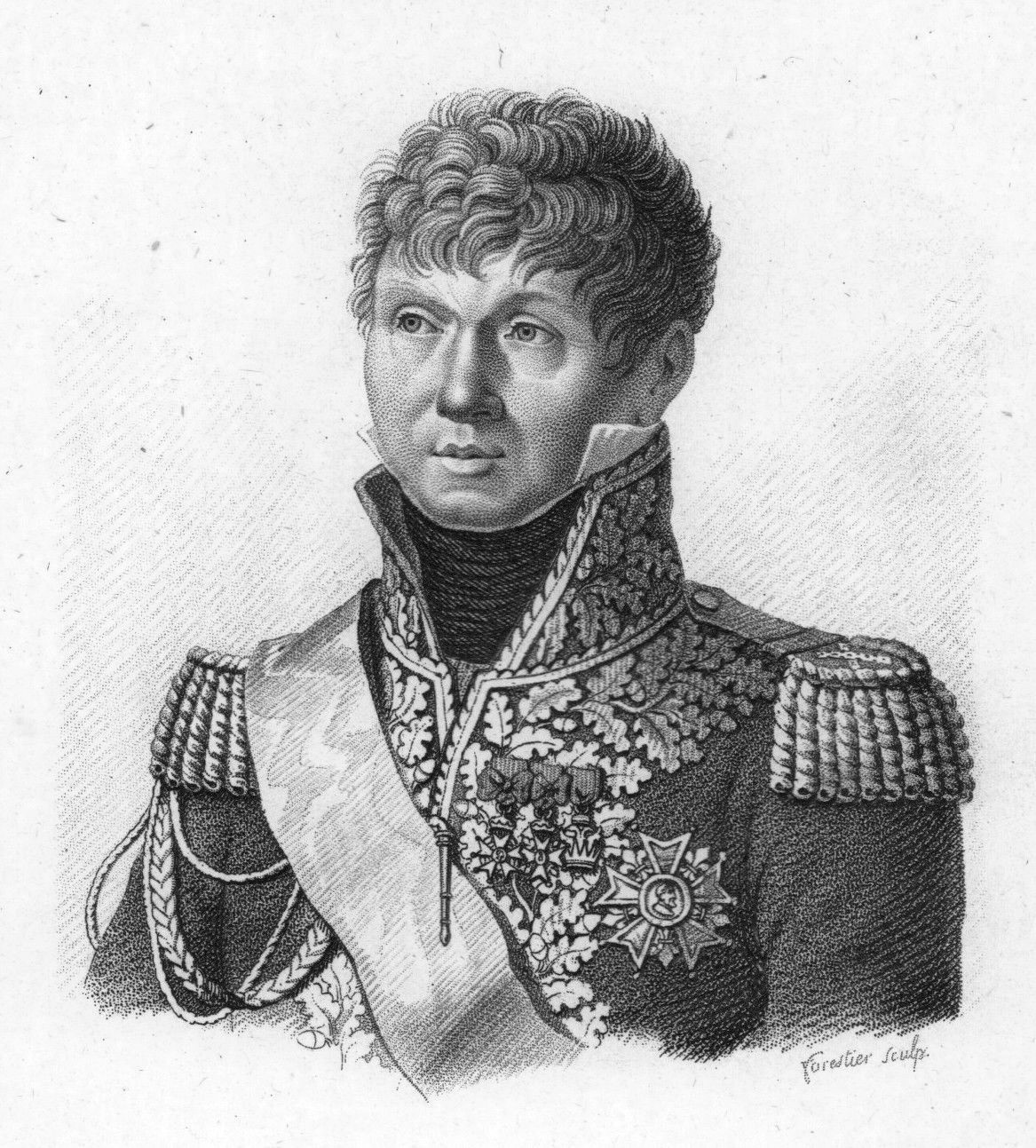
File:Marechal-victor.jpg
Marshal Claude Victor

All those struggles and all those lives lost, sill Spain didn't get her freedom and peace. It's such a tiresome and emotionally draining thing to do looking at the timeline of the war, for you see how people just so too far and plant so many seeds of evil over something rather trivial.


It is very hard to look at things the same way again after you've read lots about history. Sometimes, most of the time, we repeat the same mistakes our ancestors did. All the lost glory of past civilization was the cost of a transient vanity.


For Childe Harold, this has been a trip of personal growth. At this point, the boy who lamented the fall of his family estate is thinking about something much bigger. When you've climbed mountains and watched the rise and fall of nations, you would start to realize the frivolity of what you thought you held so dear.

19.2.13

I : LXXXV - LXXXVIII Blindly, They Fought On

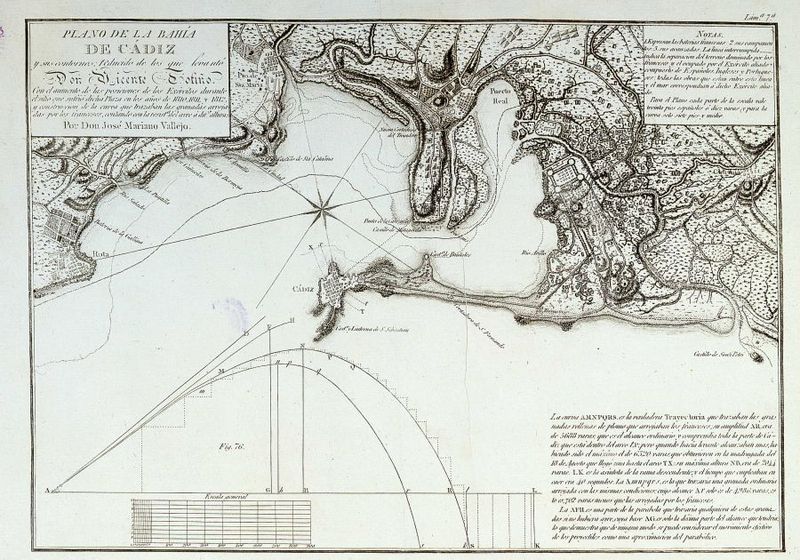
On 5th of Feb. 1810, the French started bombarding Cadiz and the Siege of Cadiz continued until 24th of Aug. 1812. The fortification of this port city proved to be so strong. Those walls seemed to be invincible! Surrounded by three arm forces, Cadiz stood still, or at least, she held on for a long time. The French almost lost hope of ever taking this place. 

File:SitiodeCadiz.jpg
Map of Cadiz in 1813.


"War even to the knife!" A common mistranslation of the laconic phrase "guerra y cuchillo", General Palafox's respond to French invaders' demand during the brutal second siege of Saragossa "paz y capitulacion"(peace ans surrender). The phrase actually meant, concisely, "war and knife", the point being, they will defend till the last drop of blood. 

File:Palafox-goya.jpg
General Palafox painted by Goya

It was uneasy for the allied force to lift the siege, as the British didn't quite trust the Spanish. Of course, the Spanish didn't give up, hence winning Byron's high regards here. 

There's again, a time lapse in the mentioned events here. The author explored the city of Cadiz in 1809 when he witnessed the unforgettable bullfight. The siege happened a year after, and didn't commence until after the poem was published. When he was drafting the first canto of Childe Harold, Byron would have known about the struggle and hold-off between Anglo-Spanish defense and French assailers in the city of Cadiz. The ruthless fight between the noble looking matadors and the enslaved beast, is definitely similar to the people of Spain who's in a rather similar situation. 


Since his youthful years spent riding pony and reading a formidable amount of books in Aberdeen, Byron had been drawn to history. Of course, his lament on people's lack of perspective wouldn't make too much sense to those Spaniards in trouble. They couldn't do anything but picking up their knives and protect their families. No matter what era it is, war never ceases to cause unnecessary deaths. It's a vicious cycle that most of us just refuse to admit. 


The reality is, the human race is not very responsible when we take actions. The savage acts of destruction and barbarism leaves us barren lands, and a dejected sight of mortifying remains of our own kind. So many times have people of enlightenment stood and sigh in front of ruins of past generations, yet the more important question is: how do we break this behavior pattern?


13.2.13

I : LIII - LIX Ode to the Spanish Maidens

There's always the constant struggle for a boy as he's at the turning point of becoming a man. Just you see, without a miss, in all literature formats: the ultimate choice between his country and his woman. If this statement sounds too sexist to you, well, you'll have to keep in mind that this was 19th Century, and people were shedding blood to prove themselves...competitions are still pretty primal if you ask me.


And here again we question the purpose of all those people giving up their lives for the glory of those few in power. It's a rather simple-minded attitude towards winning and losing: you either win (then you get all that glory, wealth and women and what not),or fight till the last drop in the battle field. There's no grey area in between, and submission is worse than hell.

For a romantic poet these few stanzas have been intense, almost hypnotizing with the war call and drum rolls as though phantom from the past. "Manhood's heart of steel" says Harold, as he sees his weak self.

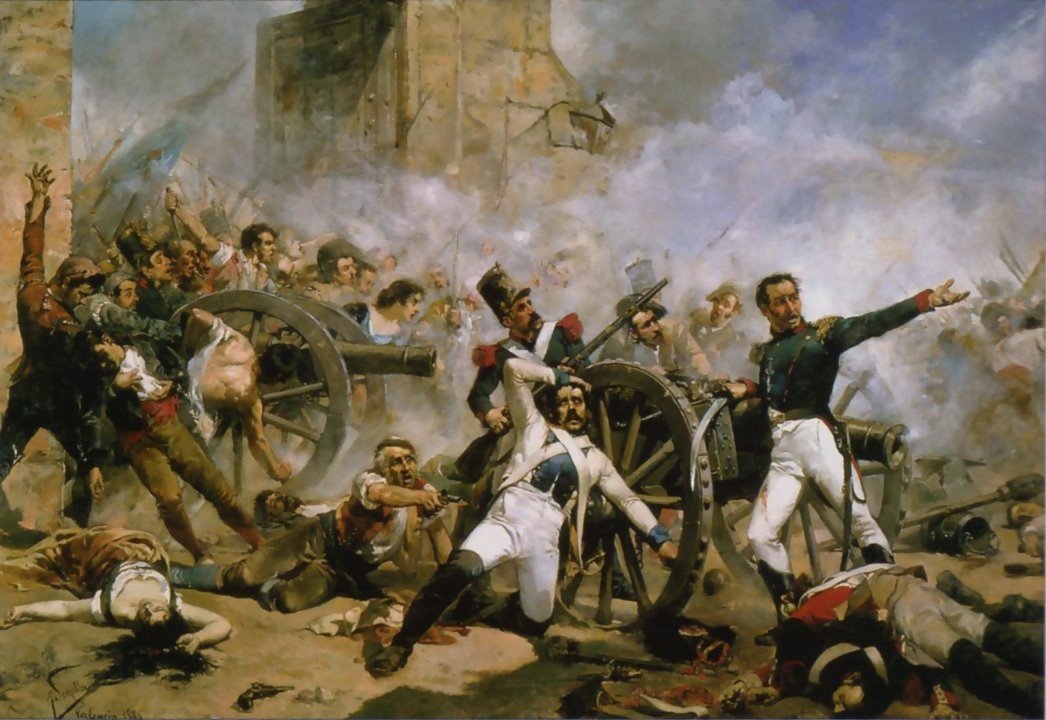
File:Defensa del Parque de Artillería de Monteleón.jpg
Defensa del Parque de Artillería de Monteleón by Joaquín Sorolla y Bastida depicts Pedro Velarde's last stand (he died May 2 1808)

And then we see a twist and redirect out attention to the Spanish maidens, the real subject our poet is paying praises to. The last five lines show us the transformation of a woman in the times of war: she's no longer the young girl, unexposed to any of the real danger, but a pilgrim of Athena's wisdom and courage, contributing to the victory in her own way.


There are incredible visual and sound elements within this stanza: the shrieking of an owl at night, the shiver of a maiden seeing, maybe a scratch on her skin, all in the memory now; and we see the ruins of a city, and the flashing weapons.

Some background information about the weapons mentioned here:
Bayonet: baïonnette. That's the knife, or spike shaped tip you see inserted on top of a musket or a rifle.
Falchion: fauchon. A one handed, single edged sword. It's heavy and is similar in shape to Chinese Dao.

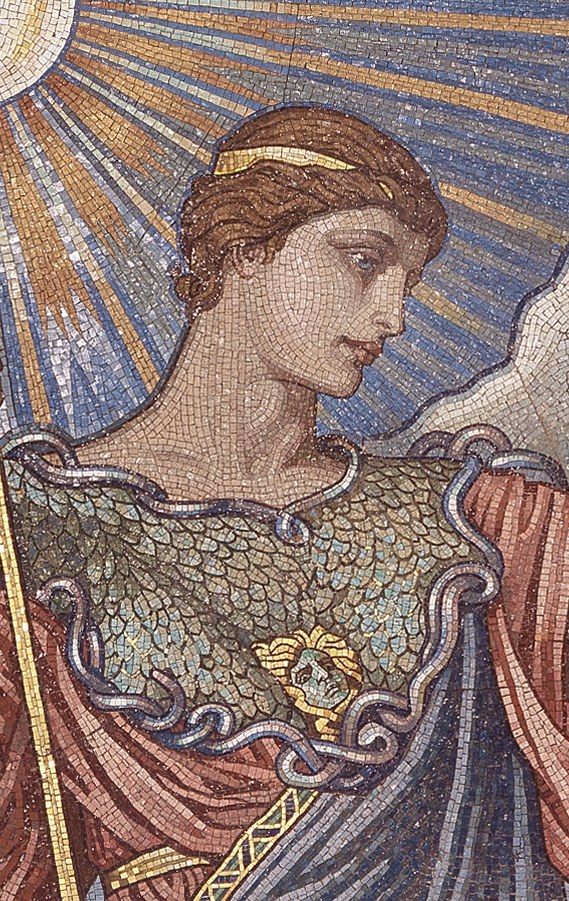
Minerva and Mars. They are Roman names of Athena and Ares. (I'm not sure why the Greeks always prefer names starting with an A, and Romans an M). Minerva is the goddess of arts and craftsmanship. Interestingly her symbol is an owl (for the wisdom). Mars, on the other hand, is the god of war. Those two brother and sister are equally strong. Byron is probably indicating the male and females of Spain with them.

File:Minerva-Vedder-Highsmith-detail-1.jpeg
Mosaic of the Minerva of Peace (detail), Elihu Vedder, 1896


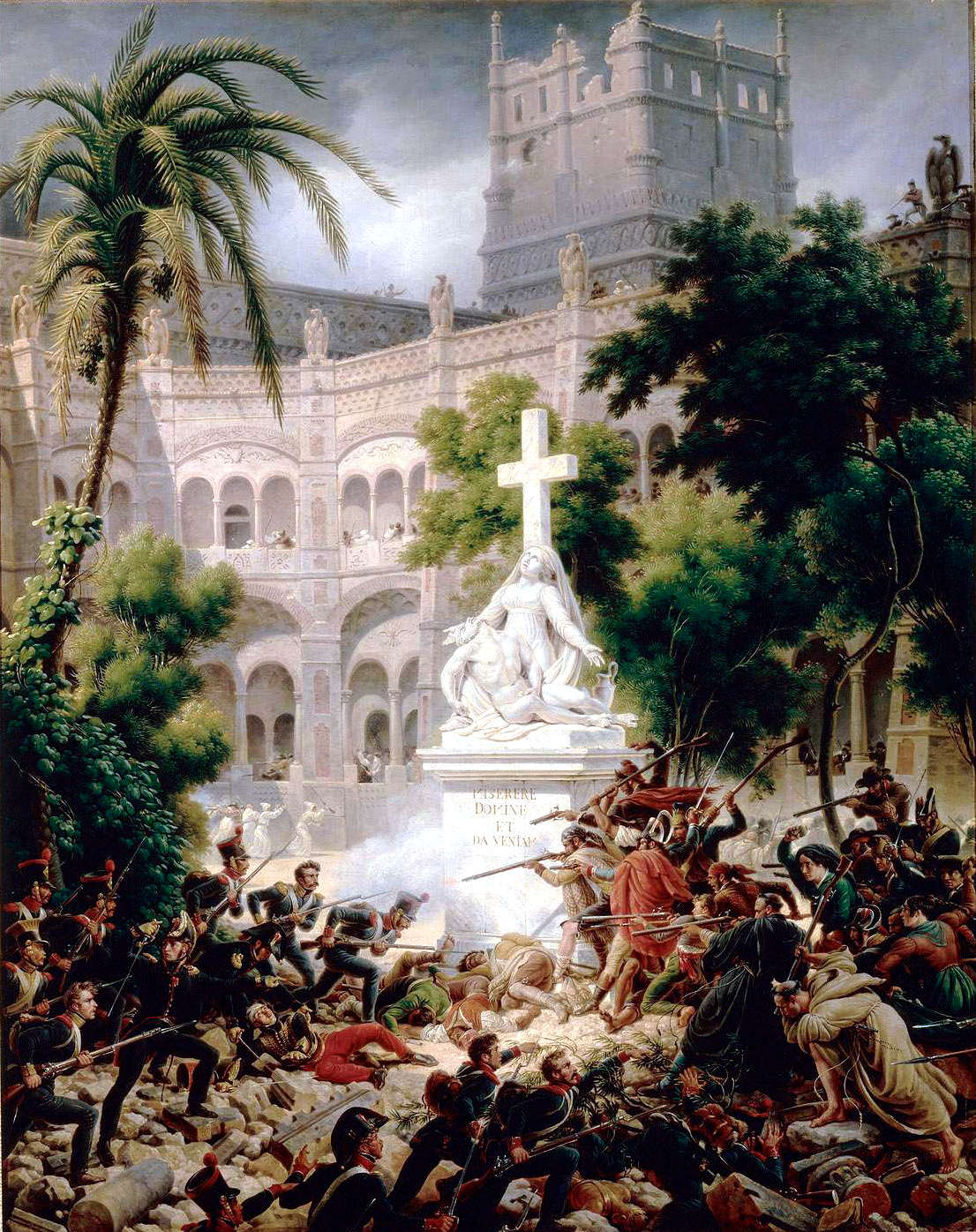
Zaragoza (known as Saragozza) is the city where Basilica, Cathedral of Our Lady of the Pillar is. It's a city of stories,and beautiful, mind I repeat myself, BEAUTIFUL architectures (mostly Roman Catholic cathedrals of course). The two sieges Zaragoza endured between 1808 to 1809 cost her some 50,000 lives. 

File:Santa Engracia - Lejeune.jpg
Assault of the French army at Santa Engracia Monastery 8 Feb 1809
The female strength depicted here is soft, yet enduring. It's her grace and serenity in the face of danger, or even death, that marvels us the most. It's quite likely that the beautiful "her" has two layers of meanings: the actual women of Spain, and Virgin Mary, the spiritual symbol that several of the landmarks of Zaragoza represent.


During the second siege of Zaragoza, the defender surrendered rather quickly. In a way, it's submission and death at the same time - gravest tragedy of all. Ode to the women who stood still when the men fell; ode to the women who remain calm and hopeful when weapons lost their use, and all that's left is dignity.

There's an old fable that goes like this: the wave laughs at the dripping water below the cliff as he smashes onto the rock, but the dripping steam just keeps going. The wave, of course, eventually accomplished nothing with smashing against the giant rock, but the dripping water managed to make a hole on the stone. Persistence, or, as Byron put it so well, "tender fierceness" is the best quality one can have when all hope is lost.

The Spanish maidens embodies romance and tender beauty as opposed to the Amazonian women warriors. The contrast, of course, impresses us even more.


In stanza 58 our focus comes back to the men, yet showing another strength of the women. They seem to have the power of encouraging men to fight for their country, to win their love. The kisses are as if trophies, only bestowed to the victors.

The poet is so fascinated by the maidens in Spain as they are so very different from those in the North, which I'm assuming means England.  The portrait of a Spanish lady with a fan might vaguely depicts what is considered beauty in early 1800s. As you can see, it's definitely not what you expect in a stereotypically slender and meek British woman around the same era - just think about Byron's old lovers and you'll see my point.

Eugene Pierre Francois Giraud (French artist, 1806-1881) A Spanish Beauty with a Fan
It's her people that show the true beauty of a city. Its palaces may fall; its reigns may change; its technologies and fashions evolve, even the climate, can be altered by the traveler's perceptions. Only people leave consistent impressions. Jean-Paul Sartre's famous "L'enfer, c'est les autres" (hell is other people) can be reinterpreted as, at least for me personally, that Paradise is other people as well. It's just the difference of our perspectives. In the beauty of humanity we seek paradises, and only then, maybe, wars and conflicts will cease.