Showing posts with label english. Show all posts

19.2.13

I : LXXXV - LXXXVIII Blindly, They Fought On

On 5th of Feb. 1810, the French started bombarding Cadiz and the Siege of Cadiz continued until 24th of Aug. 1812. The fortification of this port city proved to be so strong. Those walls seemed to be invincible! Surrounded by three arm forces, Cadiz stood still, or at least, she held on for a long time. The French almost lost hope of ever taking this place. 
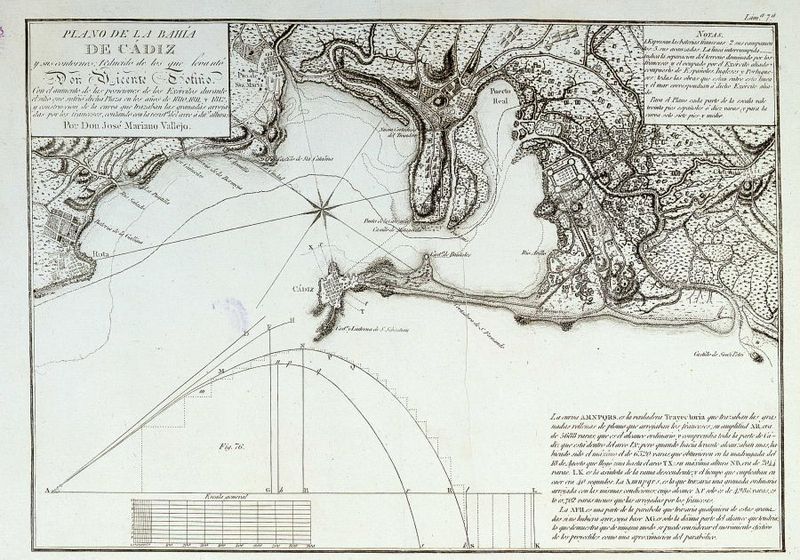
File:SitiodeCadiz.jpg
Map of Cadiz in 1813.


"War even to the knife!" A common mistranslation of the laconic phrase "guerra y cuchillo", General Palafox's respond to French invaders' demand during the brutal second siege of Saragossa "paz y capitulacion"(peace ans surrender). The phrase actually meant, concisely, "war and knife", the point being, they will defend till the last drop of blood. 

File:Palafox-goya.jpg
General Palafox painted by Goya

It was uneasy for the allied force to lift the siege, as the British didn't quite trust the Spanish. Of course, the Spanish didn't give up, hence winning Byron's high regards here. 

There's again, a time lapse in the mentioned events here. The author explored the city of Cadiz in 1809 when he witnessed the unforgettable bullfight. The siege happened a year after, and didn't commence until after the poem was published. When he was drafting the first canto of Childe Harold, Byron would have known about the struggle and hold-off between Anglo-Spanish defense and French assailers in the city of Cadiz. The ruthless fight between the noble looking matadors and the enslaved beast, is definitely similar to the people of Spain who's in a rather similar situation. 


Since his youthful years spent riding pony and reading a formidable amount of books in Aberdeen, Byron had been drawn to history. Of course, his lament on people's lack of perspective wouldn't make too much sense to those Spaniards in trouble. They couldn't do anything but picking up their knives and protect their families. No matter what era it is, war never ceases to cause unnecessary deaths. It's a vicious cycle that most of us just refuse to admit. 


The reality is, the human race is not very responsible when we take actions. The savage acts of destruction and barbarism leaves us barren lands, and a dejected sight of mortifying remains of our own kind. So many times have people of enlightenment stood and sigh in front of ruins of past generations, yet the more important question is: how do we break this behavior pattern?


17.2.13

I : LXVIII - LXXIV Before the Killing

I could only imagine how the air would thicken before a bullfight. What an act of savage and grace, exciting and dreadful, sacred and barbaric. How ironic it happened to be the sabbath, and this city is giving the gods in all the glory, a competition between man and beast, a struggle till the last breath.

The arena is full, the bull restless, the energy spouting like blood, and you hear the roaring though uncertain whether it's from the magnificent animal, or the resonance and echoes of the crowd's breathes and thoughts.

arena before the fight
It's something insatiably beautiful and sad, for you know the fight goes on until one side of the opponents is dead. 


The sabbath, in a religious sense, is the 7th day in a week, god's sacred day of rest. Depending on which religion you're in, the timing would be different. Here the poet is indicating Christian sabbath, though in Judaism, sabbath starts after sundown on Friday.


It's strikingly a cultural thing, for a bullfight in Spain is like a religious gathering in, well, for example says the poet, in London. Nobilities from all directions swarm in from their country houses, their carriages jamming the streets, to the cathedrals they go. 


Yet here in this arena it's a celebration of men's conquering of nature, in finest apparels and noblest agility. Something Byron wouldn't be able to do if I may add, which is possibly why he got so overwhelmed and fascinated by this beauty, or terror, depending on your point of view. 


There's no differences between the votaries of god: young, old, rich, poor, their confessions alike, forgiven before the altar, similarly amongst the audience of a bullfight. They are witnessing a crime, committed by men, yet the killers will be rewarded for their courage and heroism. Isn't it ironic if you really think about the nature of the fight?


All is silent before the killing. Imagine, outside of the area the streets would be empty. Everyone you know would be sitting inside of this round, heated, tormenting space overlooking a stretch of crimson coloured earth. The battle between the matador and the bull will soon begin. 

You'd be surprised to find out that the audience consists mostly of ladies. It's an exhibition of strength and agility of men, to be sure, indeed an attraction and a fantastical scene. 


The arena is a power source ready to release its energy at any time now. It's almost as though nothing else in the universe mattered, and all is focused on the centre of this space: the matador dressed in gold and embroidery; the bull, o that magnificent creature, is a spiritual embodiment of what is expected of the matador. The two of them, discrepant in size and actual strength, yet equivalent in their bosting aura.


It's been documented in memoirs that Byron didn't enjoy the bullfight although inspired by it. I cannot imagine what kind of emotional turmoil he'd been in during the show, but I believe that he would see more of himself, not in the matador  but rather in the bull, panting and prancing underneath the gazing of an entire universe. There about to be bloodshed and injury. Just like what his fame did to him, which exploded too quickly when he was mere 24.

the Matador - from Charles Lisanby

Vicente Blasco Ibanez wrote a Blood and Sand (Sangre y Arena). The entire act of a bullfight is almost a reflection of Byron's life, which had been teaming with struggle and mess, metaphorically presented in a limited space: it has more symbolism but much more exciting and concise. I'm not certain whether he enjoyed much of the act, but he surely understood all and sympathized with both. Maybe more with the bull, for the matador represents more of his vanity, yet the bull, his truth identity.